10ga vs 3.4mm: The Steel Gauge Procurement Trap
- Share
- Issue Time
- May 6,2026
Summary
The "Gauge Trap" causes costly steel procurement errors due to standard fragmentation. To ensure integrity, replace vague labels with exact metric values and ASTM standards. Always specify structural grades like ASTM A572 over merchant quality A575, as thickness alone doesn't guarantee strength. Finally, verify quality by measuring away from deformed cut edges with perpendicular calipers and using QR-based digital traceability.
10ga vs 3.4mm: The Steel Gauge Procurement Trap
Let’s be honest: the "Gauge" system belongs in a museum, not a 2026 procurement contract. I’ve seen countless buyers pull their hair out because they asked for "how thick is 10 gauge steel" and received a shipment that didn't fit their structural specs. If you are trying to finalize a high-stakes bid, you need to look past the numbers.
Why "Gauge" Still Causes Chaos
The Gauge system is a historical relic. It was designed before digital calipers existed, based on how many times a wire was pulled through a die. This is why a higher number means a thinner pipe—a logic that is fundamentally counter-intuitive.
In cross-border trade, the danger lies in the "fine print" of international standards. A 10 ga steel thickness isn't a universal constant; it shifts slightly depending on whether your supplier follows U.S., British, or older Birmingham standards. In high-stakes engineering, that 0.1mm discrepancy is the difference between a perfect fit and a rejected batch.
The Real Numbers (Beyond the Keywords)
Based on common industry queries, here is the reality of what you are actually buying:
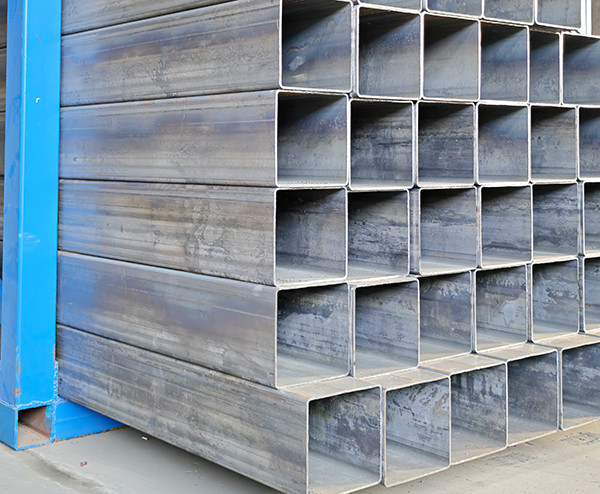
10 Gauge: Nominally 3.416 mm. This is your "heavy lifter" for industrial frames.
11 Gauge steel thickness: Nominally 3.038 mm. Warning: Many factories will try to ship a standard 3.0mm plate here to save costs—always verify your tolerances.
12 Gauge metal thickness: Nominally 2.657 mm.
14 Gauge steel: Nominally 1.897 mm.
Pro-Tips from the Shop Floor
If you want to survive a technical audit, stop relying on generic tables and start using these three "boots on the ground" strategies:
1.The ASTM A572 vs. A575 Trap
A common mistake when hunting for the thickness of 14 gauge steel is ignoring the chemistry. Never substitute ASTM A575 (merchant quality) for ASTM A572 (structural grade). A structural grade tube will hold up in a high-stakes bid, whereas merchant quality might fail under load, regardless of the gauge.
2. Stop Measuring the Edge
We’ve seen too many arguments at the warehouse gate because of bad measurement technique. To get a real reading on 11 gauge steel thickness, your caliper must be held perpendicular to the surface and placed away from the cut edge. Measuring directly at the sheared end gives you a false reading due to the physical deformation caused by the saw or shear.
3.The QR Code over the Handshake
In 2026, "trust but verify" means using QR-based authenticity systems. Don't just take the supplier's word for the thickness—verify the heat numbers and wall thickness through the factory's digital verification system. This ensures the how thick is 12 gauge metal you paid for is what actually arrived on the truck.
Closing Thoughts
Precision is the only currency that matters in modern manufacturing. Don't just ask "how thick is 12 gauge metal"—insist on the exact millimeter value, the allowed tolerance, and the specific ASTM grade. If a supplier can't give you those three things, you aren't buying steel; you're buying a headache.
Q1: Exactly how thick is 10 gauge steel in mm and inches?
A: Under standard ASTM specifications, 10 gauge steel thickness is nominally 3.416 mm or 0.1345 inches. However, always confirm the acceptable minus-tolerance with your supplier before ordering.
Q2: What is the true thickness of 14 gauge steel?
A: The thickness of 14 gauge steel is nominally 1.897 mm (0.0747 inches). Because it is relatively thin, ensure you specify the correct material grade (like ASTM A572) if it is being used for structural applications.
Q3: Is there a difference between 11 gauge and 3.0mm steel?
A: Yes. True 11 gauge steel thickness is 3.038 mm. While 3.0mm is often sold as a substitute in international markets, the 0.038mm difference can matter in precision manufacturing or strict structural audits.
Q4: How should I measure 12 gauge metal thickness upon delivery?
A: To accurately verify 12 gauge metal thickness, use a calibrated digital caliper. Crucially, do not measure at the cut edge. The shearing process deforms the metal. Place the caliper perpendicular to the flat surface, several inches away from the end, for an accurate reading.
Q5: How thick is 11 gauge steel?
A: Standard 11 gauge steel is nominally 3.038 mm or 0.1196 inches thick.