Hot Rolled vs Cold Rolled Steel Strength
- Share
- Issue Time
- Dec 23,2025
Summary
Hot rolled and cold rolled steel both start from the same base material. However, differences in processing temperature, cooling rate, and deformation behavior lead to clear differences in strength, ductility, and surface properties.
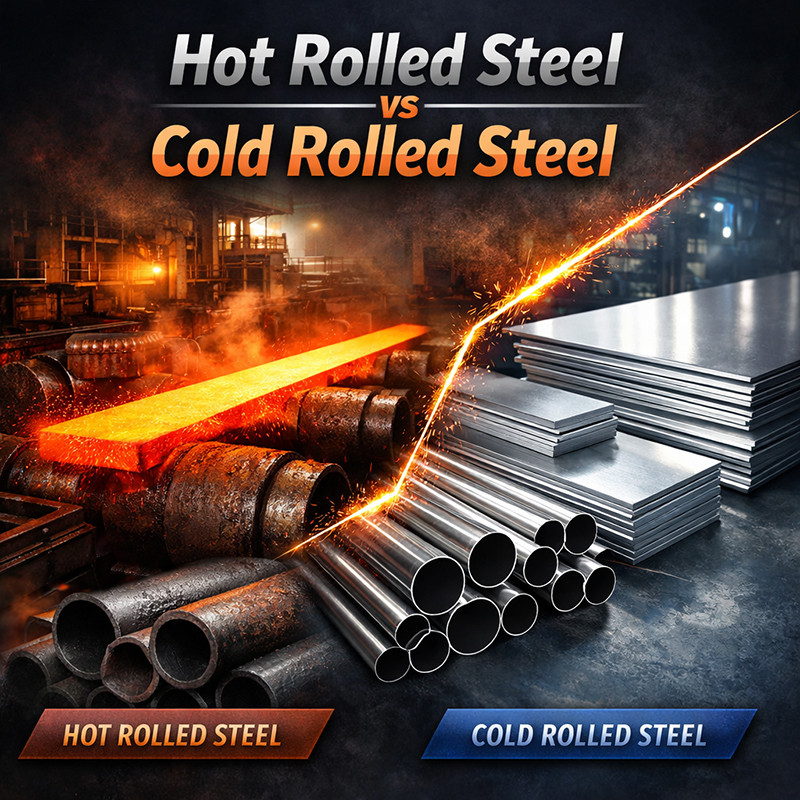
Hot Rolled vs Cold Rolled Steel Strength
Steel strength is mainly influenced by its chemistry, but chemistry is not the only factor. The rolling process also plays a key role in how steel performs in real applications.
Hot rolled and cold rolled steel both start from the same base material. However, differences in processing temperature, cooling rate, and deformation behavior lead to clear differences in strength, ductility, and surface properties.
Understanding these differences helps buyers and engineers make better material selection decisions for industrial applications.
What Is the Strength Difference Between Hot Rolled and Cold Rolled Steel?
The strength difference appears after rolling, not during steelmaking.
Rolling temperature controls how the internal structure reacts to deformation. This directly affects:Yield strength,Tensile strength,Ductility,Surface hardness
These properties are measured using standard test methods, commonly referenced in engineering guides and Wikipedia, the Free Encyclopedia.
How Rolling Temperature Affects Steel Strength
Hot Rolling at High Temperatures
Hot rolling takes place at high temperatures, above the metal’s softening point.
Grains reform constantly
Internal stress remains low
Strain hardening is limited
As a result, hot rolled steel does not reach high strength, but it shows stable and predictable material properties.
Hot rolling also improves tolerance to welding and later heat treatment.
Cold Rolling at Room Temperature
Cold rolling is performed after the steel cools down.Deformation accumulates internally.Grain structure becomes elongated.Dislocation density increases
This increases surface resistance and surface hardness, leading to higher yield and tensile strength.
The strength increase comes from processing, not from chemical changes or heat treating.
Why Cold Rolled Steel Has Higher Yield Strength
Cold rolling deforms steel without allowing grains to reform.
Higher dislocation density
Increased resistance to plastic deformation
Clearly higher yield strength
This also improves certain hard surface mechanical properties, including limited wear resistance and abrasion resistance at the steel surface.
However, cold rolled steel is not the same as specialized wear resistant materials or alloyed resistance materials.
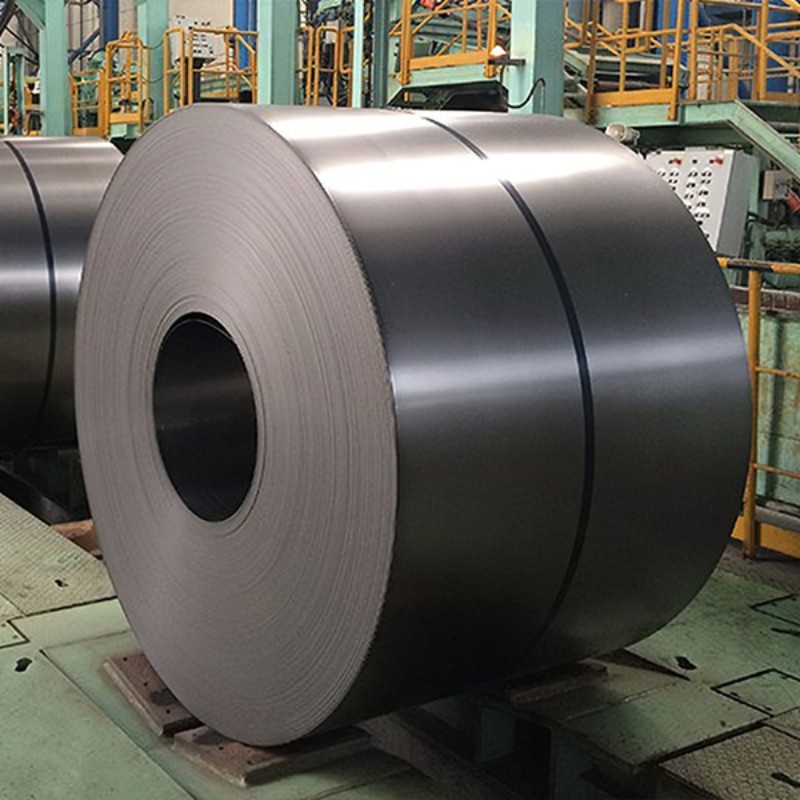
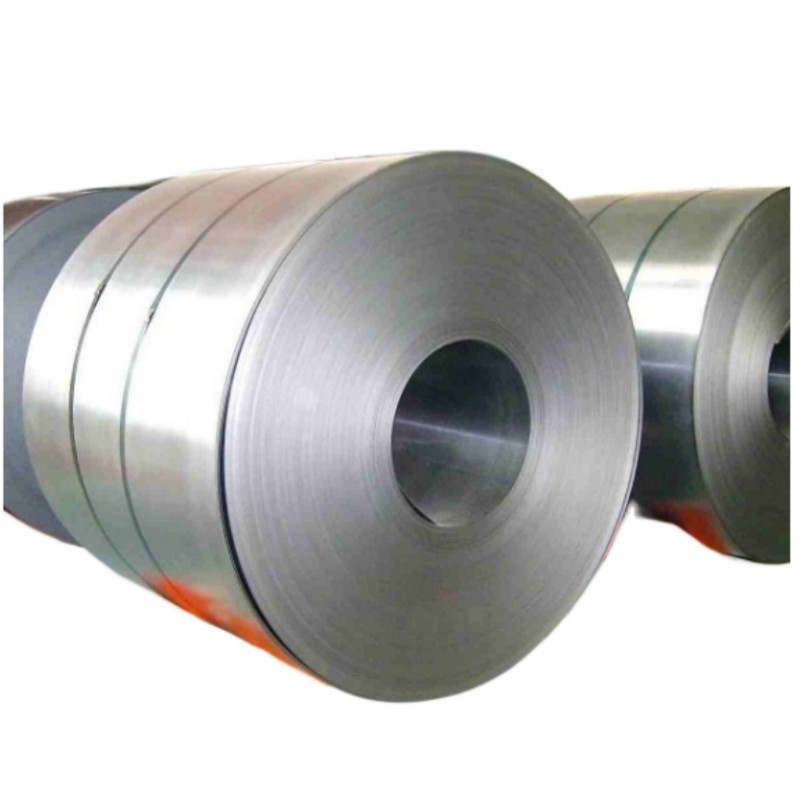
Hot Rolled Steel Strength Characteristics
Hot rolled steel shows moderate yield and tensile strength.This behavior reflects its low residual stress level after cooling.
Yield and Tensile Strength of Hot Rolled Steel
Lower strength than cold rolled steel
Consistent and predictable values
Uniform strength distribution
Uniform stress distribution supports stable performance under large or variable loads.
Ductility and Stress Distribution
Hot rolled steel has higher ductility.
Deforms visibly before failure
Absorbs energy effectively
Reduces risk of brittle fracture
Lower residual stress also improves welding quality and limits strength loss near weld zones. This is critical for large industrial applications.
Cold Rolled Steel Strength Characteristics
Cold rolled steel delivers high strength, especially in thin sections.
How Cold Rolling Increases Steel Strength
At low temperature, deformation prevents the steel from naturally relieving internal strain.
Yield strength increases significantly
Tensile strength follows the same trend
Young’s modulus remains nearly unchanged
As resistance to further deformation increases, the steel becomes stronger.
Strength Limits and Reduced Ductility
Higher strength comes with trade-offs:
Reduced ductility
Lower forming tolerance
Internal residual stresses
These stresses influence bending, cutting, and forming. They also affect surface roughness, surface finishes, and coefficient of friction during fabrication.
Hot Rolled vs Cold Rolled Steel: Strength Comparison
Cold rolled steel resists yielding under higher applied stress. This difference is clear in tensile testing.
Yield Strength and Tensile Strength Comparison
Cold rolled products consistently show higher laboratory strength values.
The difference is more noticeable in thin sections.
Hot rolled steel shows lower strength values, but its real-world performance remains reliable.
Strength Performance in Real Service Conditions
Structural performance depends on more than test data.
Important factors include:
Load type
Connection method
Fabrication process
Ductility and stress distribution
This explains why hot rolled steel is still widely used in construction and heavy industry.
Which Is Stronger for Structural and Industrial Use?
Neither hot rolled nor cold rolled steel is universally better.
The right choice depends entirely on application needs.
When Hot Rolled Steel Is the Better Option
Hot rolled steel is preferred when:
Welding and forming are required
Large sections are used
Deformation tolerance matters
Its ductility and low internal stress make it reliable and safe for load-bearing structures.
When Cold Rolled Steel Is the Better Choice
Cold rolled steel is suitable for:
Precision components
Thin sections requiring high yield strength
Applications where surface quality matters
Better control of the steel surface also improves appearance and dimensional accuracy.
How to Choose the Right Steel Material
Material choice should be based on service conditions, not strength alone.
Key factors include:
Required material property
Fabrication method
Cost
Surface hardness and surface condition
Corrosion resistance (especially compared with stainless steels)
Strength, Cost, and Processing Considerations
Cold rolled steel increases material cost because extra processing.
It may also reduce fabrication flexibility.
Hot rolled steel often lowers overall project cost while still meeting strength requirements for many industrial applications.