Understanding and Preventing Common Galvanized Steel Defects
- Share
- Issue Time
- Mar 17,2026
Summary
In the world of hot-dip galvanizing, looks can be deceiving. Unlike paint, which is a topical aesthetic coating, galvanizing is a metallurgical reaction. It’s a messy, high-heat industrial process where the steel’s own chemistry dictates the final result. Understanding which "defects" are actually deal-breakers—and which are just character marks—is essential for keeping projects on schedule without sacrificing corrosion protection.
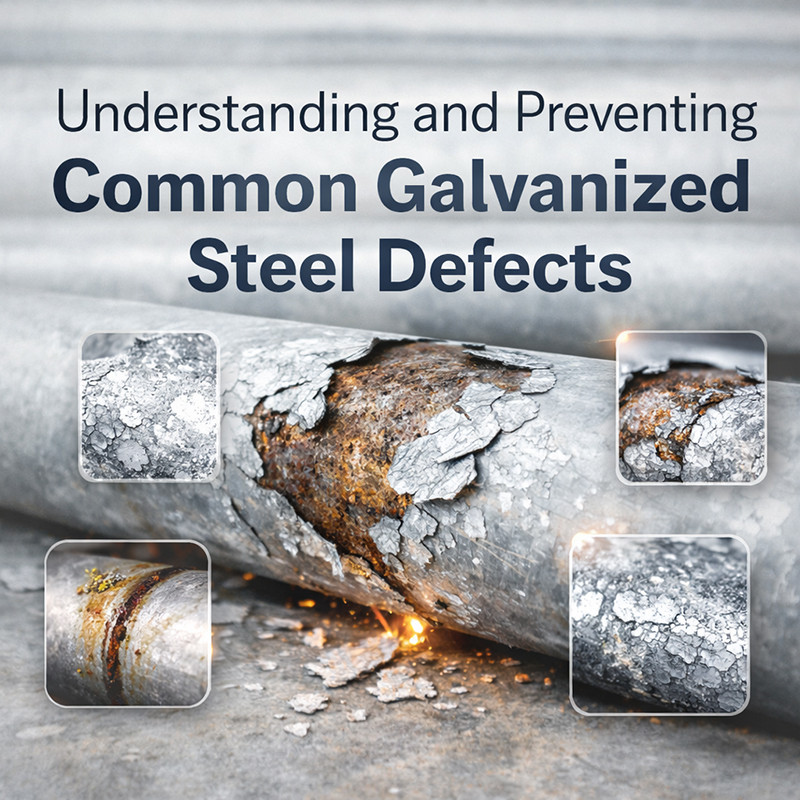
Understanding and Preventing Common Galvanized Steel Defec
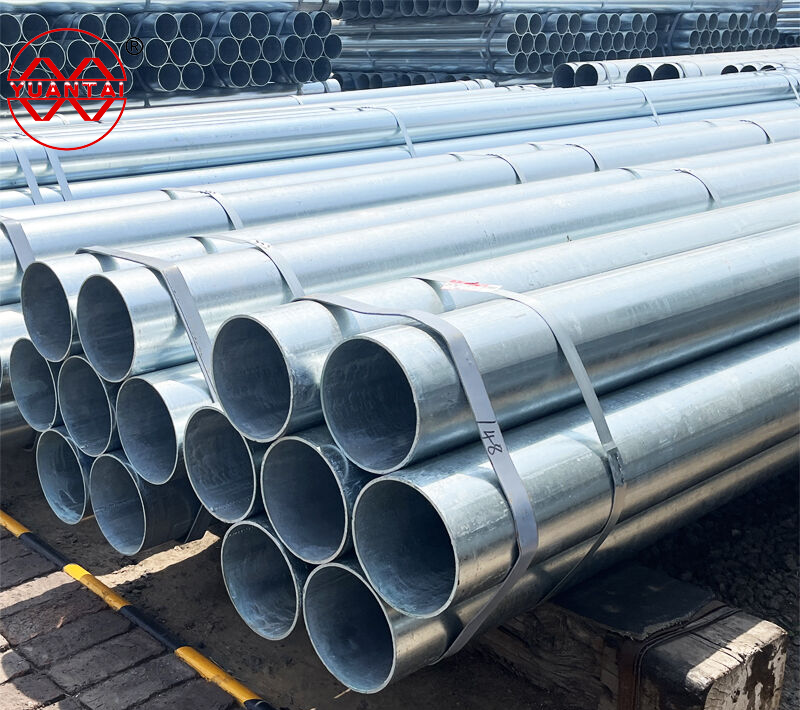
When a batch of structural steel pipes comes out of the zinc kettle, the first thing a procurement officer or inspector does is look at the finish. Often, there’s a moment of tension: one pipe is bright and shiny, while the next is a dull, mottled grey. To the untrained eye, the grey one looks "burnt" or defective.
However, in the world of hot-dip galvanizing, looks can be deceiving. Unlike paint, which is a topical aesthetic coating, galvanizing is a metallurgical reaction. It’s a messy, high-heat industrial process where the steel’s own chemistry dictates the final result. Understanding which "defects" are actually deal-breakers—and which are just character marks—is essential for keeping projects on schedule without sacrificing corrosion protection.
The Root of the "Problem": Reactive Steel
Before diving into specific defects, we have to talk about Si and Phosphorus P. These two elements are the "engine" of the galvanizing reaction.
In what we call "reactive steel" (often within the Sandelin Range of 0.05% to 0.15% Silicon), the zinc-iron alloy layers grow much faster and thicker than usual. This leads to many of the aesthetic issues discussed below. The irony? These "ugly" grey coatings are often significantly thicker and offer longer corrosion protection than the pretty, shiny ones.
Bare Spots: The True Deal-Breaker
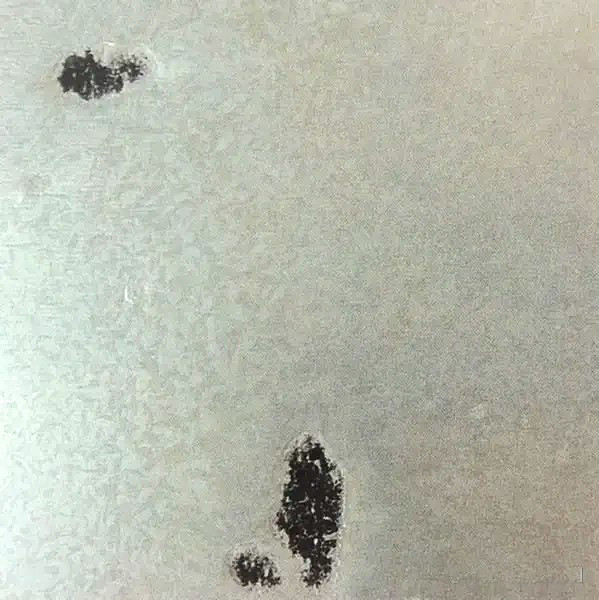
Bare spots are exactly what they sound like: areas where the zinc failed to bond, leaving the black steel exposed. This is a critical failure because these spots are the "entry point" for rust.
The Cause: Almost always, it’s a failure in pre-treatment. If a square tube has a patch of industrial grease, a splash of oil-based paint, or welding slag that wasn’t properly cleaned, the acid pickling won't reach the steel. The zinc simply slides off these areas.
Practical Example: Imagine a technician marks a bundle of pipes with an oil-based paint pen. If that mark isn't removed with a solvent before the pipes hit the acid bath, you’ll end up with a bare spot in the exact shape of that serial number.
The Fix: Small spots (less than 1 inch or 0.5% of the surface area) can usually be repaired using zinc-rich solder or spray. Anything larger requires stripping and re-galvanizing.
Mottling and "Dull vs. Shiny"
This is the most common cause of unnecessary rejections. Mottling refers to a patchy, marble-like appearance on the surface.
The Cause: This occurs during the cooling phase. In heavier steel sections, the heat stays in the metal longer, allowing the zinc-iron reaction to continue even after the pipe is out of the bath. This "consumes" the bright pure-zinc outer layer, turning it a matte grey.
Why it Matters: It doesn't. ASTM A123/A153 standards are clear: as long as the coating thickness meets the spec, color and brightness are not grounds for rejection. In fact, in "nature walk" settings or industrial parks, this dull grey finish often weathers more gracefully than a bright one.
Dross and Ash Inclusions: Top vs. Bottom
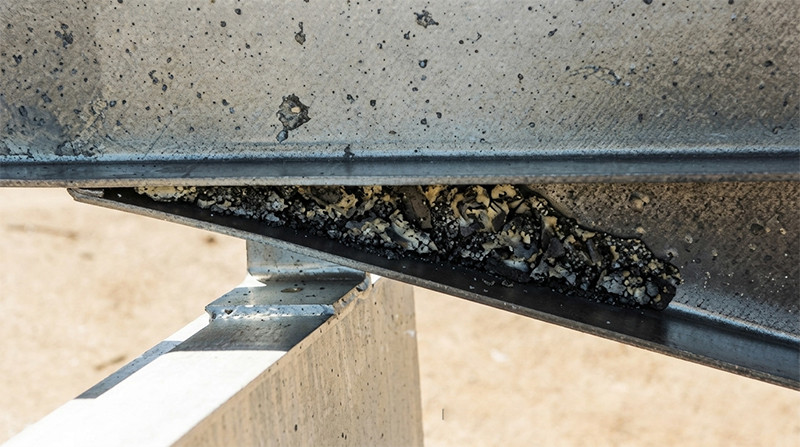
If you feel a "gritty" texture or see yellowish-white charred spots, you’re looking at inclusions.
Dross (Pimples): These are small, hard particles of zinc-iron crystals that settle at the bottom of the kettle. If the bath is agitated—perhaps by dropping a large 500mm rectangular tube too quickly—the dross gets stirred up and trapped in the coating.
Ash Staining: Zinc ash is the oxidized "skin" on top of the molten zinc. If the galvanizer doesn't skim the surface thoroughly before pulling the steel out, this ash sticks to the product.
Practical Example: On a large-diameter pipeline project, dross inclusions on the threads can prevent a proper fit. While the dross itself is protective, its physical presence can interfere with the mechanical assembly.
Flaking and Peeling (Delamination)
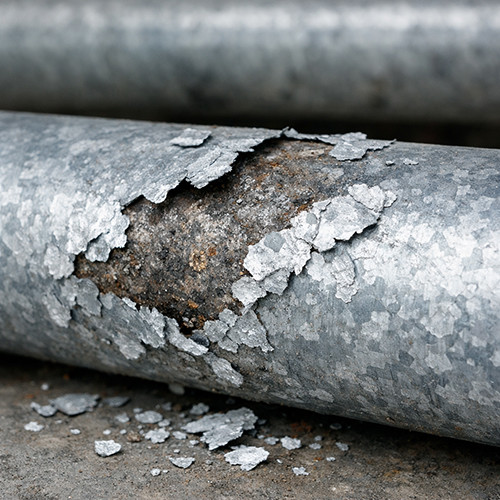
This is a more serious structural issue where the coating literally separates from the base metal in large scales.
The Cause: This is typically seen in very thick coatings (over 8 mils) on highly reactive steel. The bond between the brittle alloy layers and the ductile pure zinc layer becomes stressed during cooling or handling, causing them to "unzip."
The Difference: Don't confuse this with Flaking, which usually happens due to physical impact or extreme stress on a very heavy coating. Peeling (delamination) is often a sign of a chemical mismatch or poor temperature control during the dip.
Flux Inclusions and Black Spots
If you see tiny black specks or "voids" under the zinc layer, it’s likely flux.
The Cause: In "wet" galvanizing, the steel passes through a layer of liquid flux on top of the zinc. If that flux gets trapped in a corner or a weld bead and doesn't release, the zinc can't get under it.
The Risk: Unlike dross or ash, flux is corrosive. If it's trapped against the steel, it can cause "under-film" corrosion, eventually causing the coating to fail from the inside out.
Lumps, Runs, and "Frozen" Zinc
For manufacturers of tubes and pipes, the design of the product is often the culprit here.
The Cause: If a pipe is withdrawn from the bath too quickly, or if it lacks proper drainage holes, the molten zinc can't flow back into the kettle. It "freezes" as it runs down the side, creating thick ridges or "icicles."
Practical Example: In rectangular hollow sections, if the end-caps aren't properly vented, the zinc can pool in the corners. This not only wastes expensive zinc but can also throw off the weight and balance of the structural component.
Comparison of Common Defect Impacts
| Issue | Aesthetics | Corrosion Protection | Ground for Rejection? |
| Bare Spots | Poor | None | Yes |
| Mottling/Grey | Low | Excellent (often thicker) | No |
| Dross (Pimples) | Rough | Good | Only if interfering with fit |
Peeling | Poor | Compromised | Yes |
White Rust | Chalky | Good (if light) | Usually no (requires cleaning |
Final Thoughts: Designing for Success
Most galvanizing "defeats" aren't actually failures of the galvanizer—they are failures of preparation or design. To get a high-quality finish on industrial steel, communication is key:
Check your Steel Chemistry: Ensure your supplier provides mill test certificates. If the Si is high, expect a grey, thick coating.
Design for Flow: Ensure tubes have adequate vent and drain holes. Molten zinc needs to move like water; if it gets trapped, it creates lumps and ash.
Clean the Welds: Use water-based anti-spatter sprays. Oil-based products are the leading cause of bare spots.
At the end of the day, a galvanized pipe is a tool, not a trophy. Its beauty lies in its ability to withstand decades of harsh environmental exposure. As long as the zinc is bonded and the thickness is there, the steel is safe.