What's the difference of Pipe and Tube?
- Share
- Issue Time
- Jan 7,2026
Summary
Steel vs Iron
Hardness: Steel is harder; iron is softer and more ductile
Strength: Steel has higher tensile strength
Ductility: Iron bends more easily; steel is stiffer
Applications: Steel for load-bearing, cutting, machinery; iron for shaping and decorative purposes
Heat treatment: Steel can be strengthened; iron cannot
In short, steel outperforms iron in hardness, strength, and versatility, which is why it dominates modern construction and manufacturing.
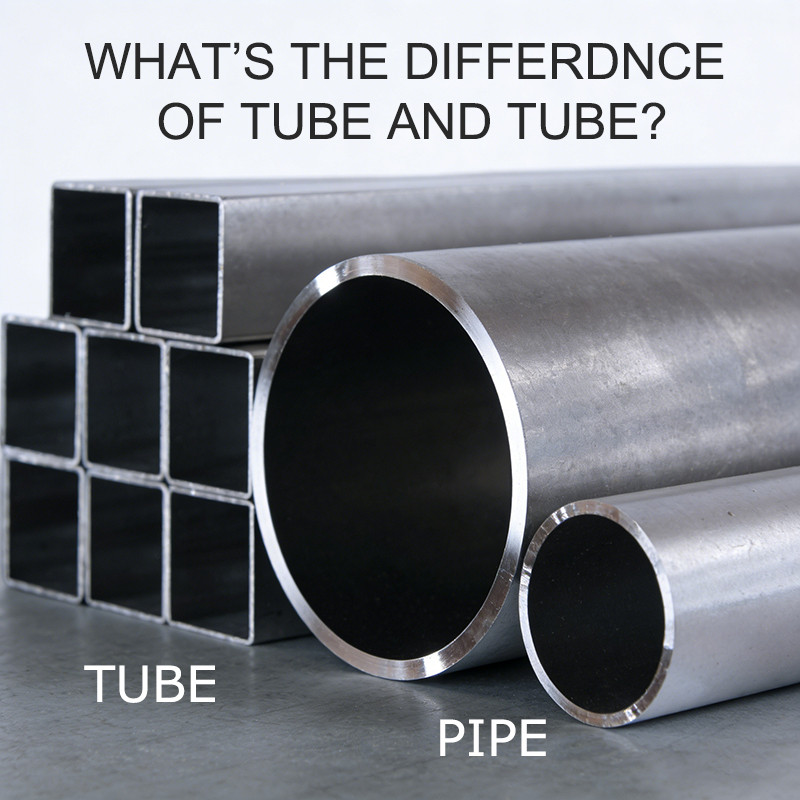
What 's the difference of Pipe and Tube?
In the steel industry, pipe and tube are often used as if they mean the same thing, especially in non-technical communication.
From an engineering and standards perspective, however, the distinction is clear and function-driven.
Understanding this difference is essential for correct specification, regulatory compliance, and efficient procurement.
Although both products are hollow steel sections, their design intent, dimensional systems, and application environments differ in fundamental ways.
These differences influence not only performance but also how products are certified, priced, and searched in global trade.
What Defines a Steel Pipe
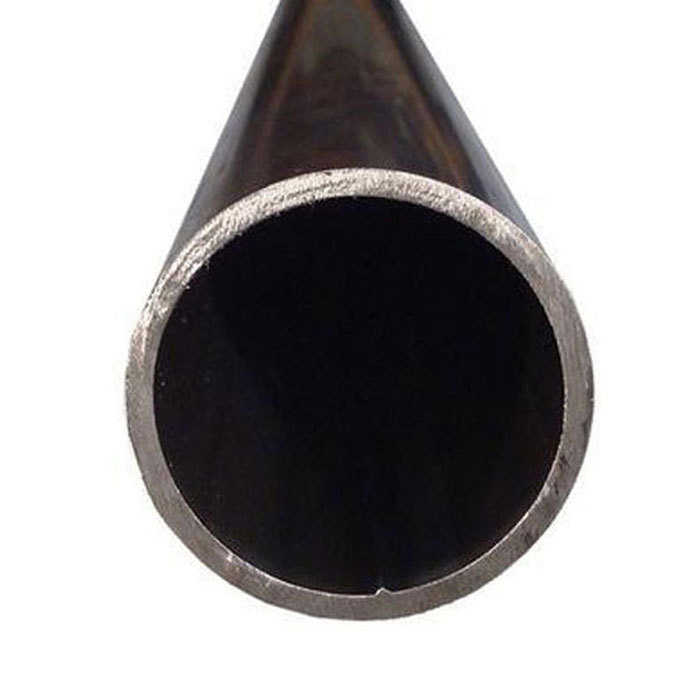
A pipe is manufactured primarily for the transportation of fluids or gases.
This single purpose shapes nearly every aspect of its design, from geometry to testing requirements.
Most pipes are round, a form that distributes internal pressure evenly along the wall.
This geometry makes pipe suitable for conveying media under sustained or fluctuating pressure.
As a result, pressure resistance is always a central concern.
Pipe sizing follows the Nominal Pipe Size (NPS) system, which does not directly represent actual outside diameter.
Schedule (SCH) defines wall thickness as a standardized system that indicates pressure capacity rather than physical thickness alone.
Because flow performance matters, internal diameter plays a functional role.
Schedule selection therefore affects both strength and flow rate.
Common Pipe Applications
Pipes are widely used in:
Oil and gas transmission networks
Water supply and drainage systems
Steam and boiler installations
Chemical and industrial process lines
Typical Pipe Standards
Well-established pipe standards include:
ASTM A106 for seamless carbon steel pipe
ASTM A53 for welded and seamless pipe
API 5L for line pipe applications
ASME B36.10 and B36.19 for dimensional control
Industry example:
When a project specifies SCH 40 carbon steel pipe for natural gas, the requirement is clearly pressure-driven.
Engineers choose the product to transport gas safely, not for precise size or appearance.
What Defines a Steel Tube
Manufacturers design tubes to support loads and keep precise dimensions in structural or mechanical applications.
Unlike pipe, a tube is not intended to carry pressurized media as its main function.
Tube dimensions are specified by outside diameter and wall thickness, or by width and height in non-round shapes.
This system allows precise control over external size, which is critical for fabrication and assembly.
Tubes are produced in a wide range of shapes.
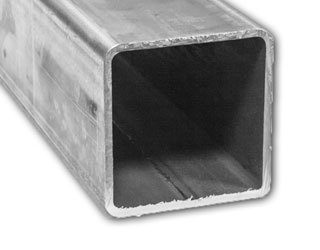
Tubes are available in several shapes. The most common forms are round, square, and rectangular.
Square and rectangular hollow sections, in particular, are widely used in construction and structural engineering.
Dimensional tolerance is typically tighter than that of pipes.
Straightness, surface condition, and corner geometry may also be specified, depending on the application.
Common Tube Applications
Tubes are widely used in:
Building and construction structures
Steel frames, columns, and trusses
Machinery and industrial equipment
Automotive components and furniture
Typical Tube Standards
Frequently used tube standards include:
ASTM A500 for structural steel tubing
ASTM A513 for mechanical tubing
EN 10210 and EN 10219 for structural hollow sections
JIS G3466 for square and rectangular tubes
Industry example:
A 100 × 100 × 5 mm square hollow section used in a steel frame is classified as a tube.
Its performance depends on geometry and material strength, not internal pressure resistance.
| Item | Pipe | Tube |
| Pirmary purpose | Fluid/gas transportation | structural & mechanical use |
| Typical shape | Round | Round,square,rectangular |
Dimension method | NPS+Schedule | OD x wall thickness |
Pressure rating | Required and specifies | Not the main focus |
Dimensional tolerance | Relatively loose | More precise |
Common industries | Oil & gas,utilities,chemical | Contsruction,machinery,automotive |
Example product | API 5L X52 pipe | EN 10210 S355 square tube |
Why the Distinction Matters
The difference between pipe and tube is not merely academic.
It has direct engineering and commercial consequences.
A pipe selected without the correct schedule may fail under operating pressure.
A tube with unsuitable tolerance may cause alignment issues in structural assemblies.
Certification requirements also differ.
For example, EN 10210 certification applies to structural tubes, not to pressure pipes.
Using the wrong documentation can delay approvals or invalidate compliance.
From a procurement perspective, using the wrong terms often leads to inaccurate quotations.
This creates confusion, especially in international transactions where standards and expectations vary.
Common Misuse in the Market
Square and rectangular products are frequently labeled as “pipe.”
This usage is common but technically inaccurate.
The correct term is square tube or rectangular tube.
Manufacturers or buyers sometimes describe EN 10210 products as pipes.
This creates confusion in certification and inspection.
They are structural tubes by definition.
Schedule information is occasionally omitted when quoting pipes.
Without schedule, pressure performance cannot be evaluated accurately.
Making the Right Choice
A pipe is appropriate when fluid or gas transport is involved and pressure resistance is required.
A tube is appropriate when structural strength, dimensional accuracy, or non-round geometry is essential.
Visual similarity should not guide selection.
Function, standard, and application must lead the decision.
Conclusion
Pipe and tube may appear similar at a glance, yet their roles within industry are clearly defined.
Pipes are engineered for media transmission under pressure, while tubes are engineered for structural and mechanical performance.
Using the correct terminology improves communication, supports compliance, and reduces project risk.
For manufacturers, traders, and end users, this understanding leads to more efficient and reliable outcomes.