Why Upgrade to High Strength Steel S275 to S960?
- Share
- Issue Time
- Apr 17,2026
Summary
Building "bigger" with more steel is dead. In 2026, HSS and UHSS are the essential bypass to bloated, high-carbon designs. By leaning out the structural skeleton, these materials reduce environmental impact while significantly lowering foundation and logistics overhead. Efficiency is the new strength.
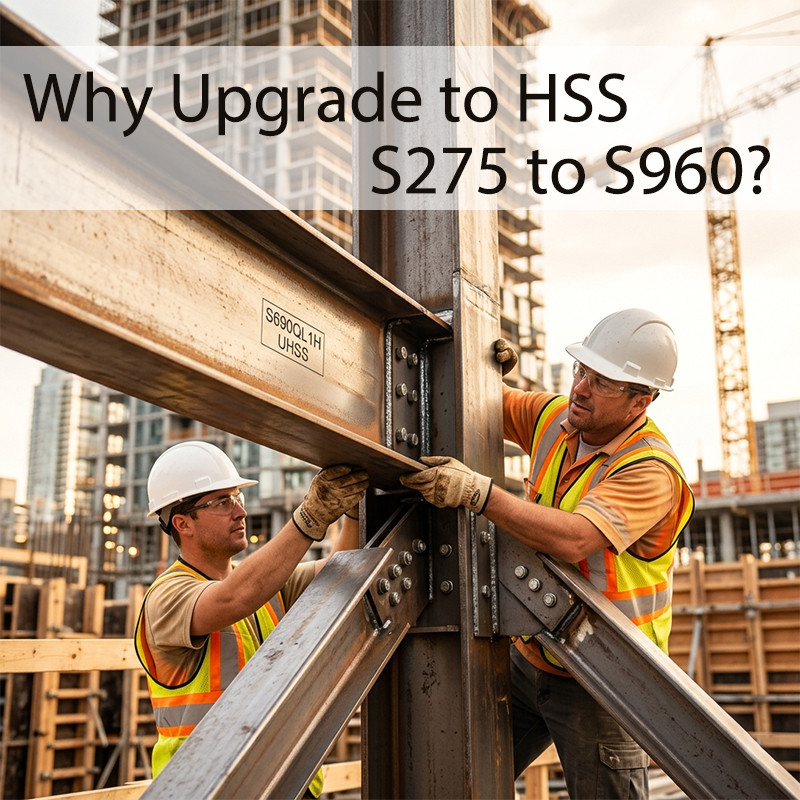
Why Upgrade to High Strength Steel S275 to S960?
Let’s talk about the "Material Redundancy" trap. For a long time, building bigger simply meant using more steel. But in the 2026 landscape, that approach is financially and environmentally dead. Relying on legacy carbon steel often results in bloated structures that fail to meet modern decarbonization standards. HSS and UHSS are the technical bypass to this problem. They allow us to lean out the structural skeleton, reducing the total carbon footprint while significantly cutting down on logistics and foundation overhead.
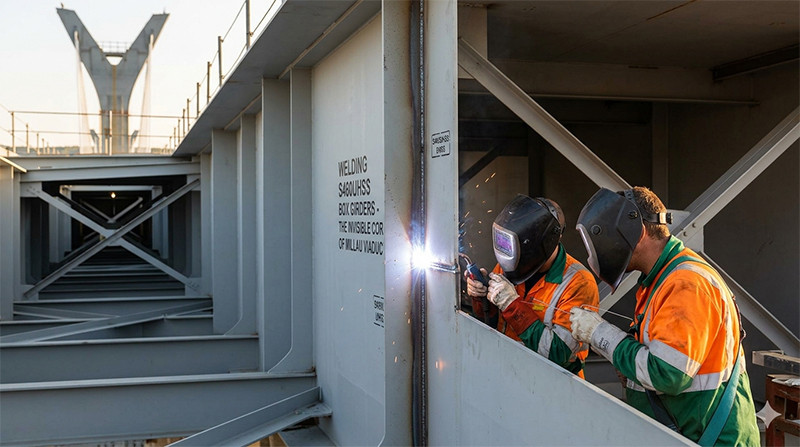
When Does S275 or S355 Stop Being Enough?
For many standard hollow sections, S275MH and S275MLH provide a reliable foundation. However, as load requirements intensify, the industry has shifted toward the versatile 355 range. Whether it's the high-impact resilience of S355K2H, the normalized performance of S355NH and S355NLH, or the enhanced weldability of S355MH and S355MLH, these grades are now the bare minimum for modern infrastructure.
But what if your project demands a drastic reduction in dead load? That is where the 420 and 460 series come into play. Grades like S420MH, S420MLH, and the high-performance S460NH, S460NLH, S460MH, and S460MLH allow for significantly slimmer profiles without sacrificing structural integrity.
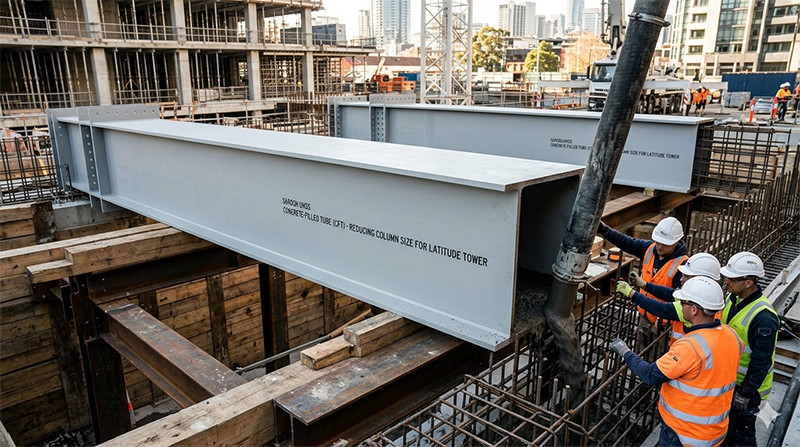
Can Ultra-High Strength Steel Solve the Weight Problem?
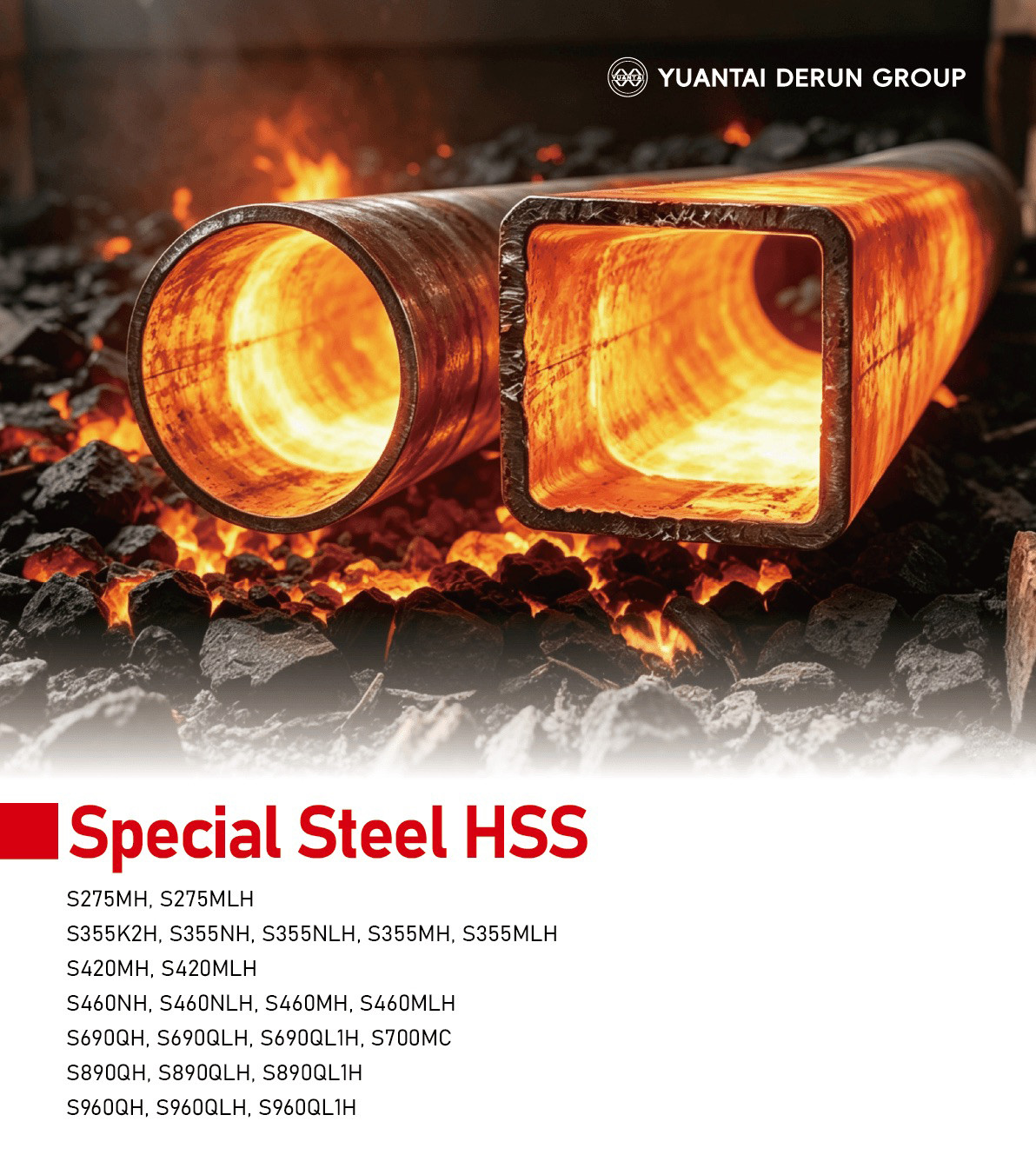
Once you cross the 690 MPa threshold, the rules of design change. Using Quenched and Tempered (QT) steels like S690QH, S690QLH, and the extreme-temperature S690QL1H can reduce material weight by up to 30%. For those specializing in complex cold-forming, S700MC offers a unique balance of strength and flexibility.
At the absolute pinnacle of the market, we see the 890 and 960 series. Incorporating S890QH, S890QLH, S890QL1H, or the elite S960QH, S960QLH, and S960QL1H into your design might seem like an overkill—until you calculate the savings in transportation, foundation work, and welding consumables.
Q: Does S960 steel have the same stiffness as S355?
A: Surprisingly, yes. The Modulus of Elasticity is constant across all steel grades. While S960 is much stronger, it isn't "stiffer." Engineers must account for deflection and buckling when using thinner, high-strength sections.
Q: Is welding S460 or S690 more difficult than standard steel?
A: It requires more precision. Welding UHSS demands low-hydrogen electrodes and strict control over cooling rates to prevent cracking in the Heat-Affected Zone.
Q: How does HSS contribute to "Green Building" certifications?
A: By using high-performance grades like S460MLH or S960QLH, you reduce the total tonnage of steel required. Every ton of steel saved is a ton of carbon kept out of the atmosphere. It’s the most straightforward path to satisfying 2026's "Green Building" thresholds—proving that hitting environmental targets doesn't have to mean sacrificing the scale or ambition of the design.