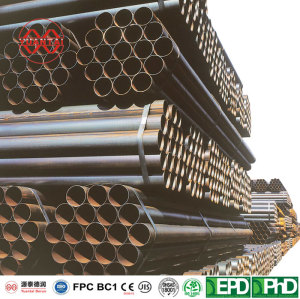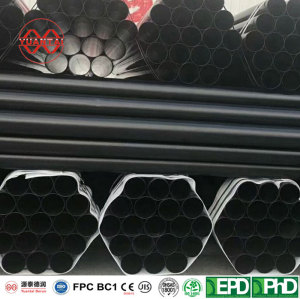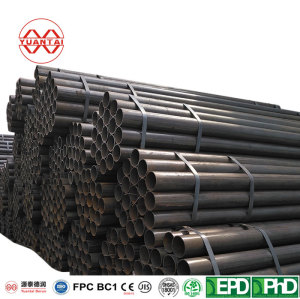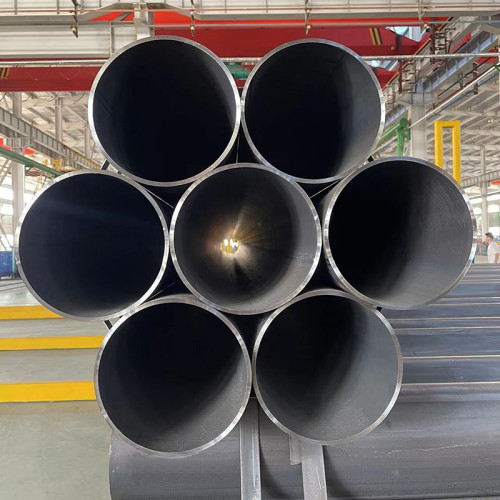
EN 10255 S195T Steel Pipe | Fire Sprinkler, Water & Gas Fluid Tubes
Item specifics
- Outer Diameter (OD)
- DN8(10.2mm) to DN150(165.1mm)
- Wall Thickness (WT)
- 2.0mm – 5.4mm (Standard Framework)
- Available Length
- 0.5m – 24m (as customers required )
- Applicable Standards
- EN 10255
- Steel Grade Selection
- S195T(Non-alloy steel for threading)
- Dimensional Tolerance
- Standard-specific deviations or managed to tailored project submittals
- Pipe End Finishing
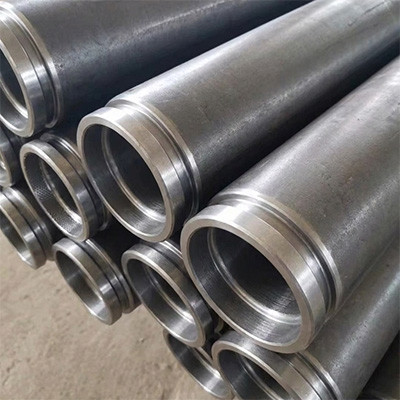
- Plain Ends / Thread Turning / Grooving
- Surface Treatment
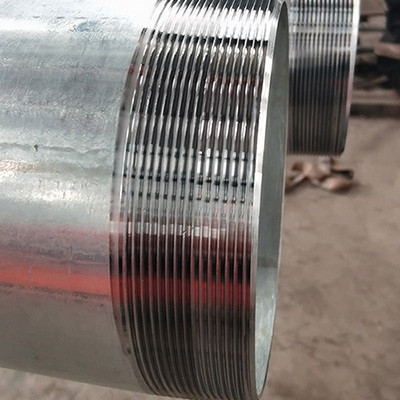
- Bare Black or Galvanized
- Commercial Terms
- Standardized MOQ : 2–5 Tons; flexible payment options including T/T and L/C
Review
Description
EN 10255 S195T Product Overview & Applications
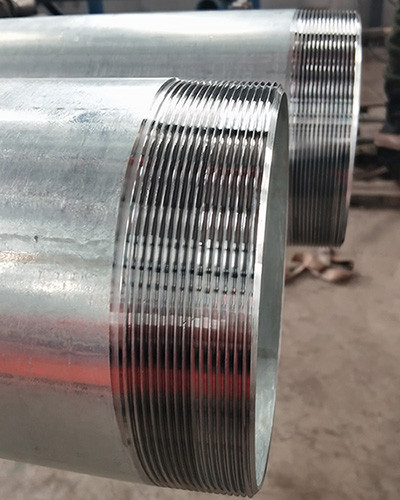
EN10255 S195T Welded Tube
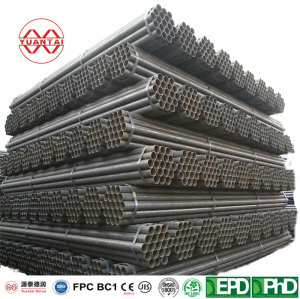
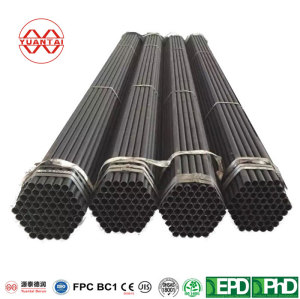
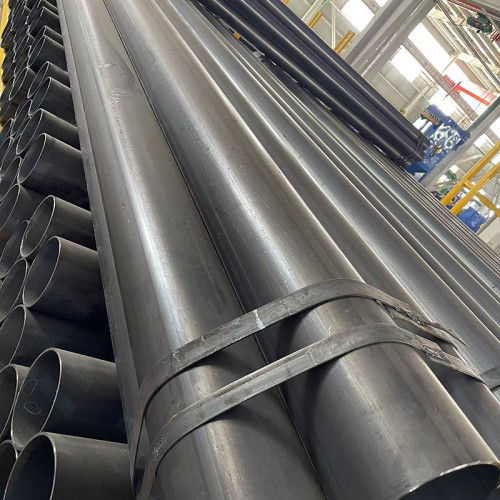
EN 10255 non-alloy steel tubes engineered for high-efficiency welding and precision threading. Manufactured by Yuantai Derun Group, these premium S195T pipes are available in both structural bare black and uniform hot-dip galvanized finishes. Designed to support low-pressure fluid networks, HVAC, and fire sprinkler systems, our production line offers flawless delivery formats including plain ends, threaded and coupled, and mechanical grooved ends tailored to rigorous European project submittals.
Key Applications of EN 10255 Steel Pipes
-Fire Sprinkler Systems
-Water Supply & Gas Distribution
-HVAC & Chilled Water Networks
-Industrial Compressed Air Systems
-Solar Mounting Structures
-Scaffolding & Access Systems
-Equipment Support Frameworks
-General Mechanical and Construction Applications
Technical Dimensions, Wall Thickness & EN 10255 Standards
When evaluating international project submittals, pipeline engineers and QC officers prioritize compliance with structural and hydrostatic baselines. Our manufacturing processes fully align with, and exceed, the following mandatory criteria defined by the EN 10255 European Standard:
📦1. Dimensional Series & Tube Classification
EN 10255 non-alloy steel tubes are categorized based on their wall thickness, pressure ratings, and structural load capacities. We provide full-spectrum manufacturing across all official series:
Traditional Series: Includes Medium (M) and Heavy (H) series. These are the industry benchmarks for high-pressure fluid networks and standard fire sprinkler systems.
Light Series (Types): Includes Type L, Type L1, and Type L2. These series optimize wall thickness while maintaining certified test pressures, allowing for high cost-efficiency in precise engineering budgets.
📐 2. Structural Deviations & Dimensional Tolerances
Achieving leak-tight mechanical coupling and precise on-site fabrication requires strict geometry management.
Outside Diameter (OD) Tolerance: The standard enforces precise upper and lower limits for each nominal size to guarantee a perfect seal with mechanical couplings, flange joints, or threaded fittings.
Wall Thickness (WT) Tolerance:
For Medium (M) and Heavy (H) series, the specified negative deviation is strictly restricted within -12.5%.
For Light Series (L, L1, L2), the allowable tolerances are even more rigorous to ensure structural safety under reduced mass.
🔬 3. Mandatory Testing & Integrity Testing
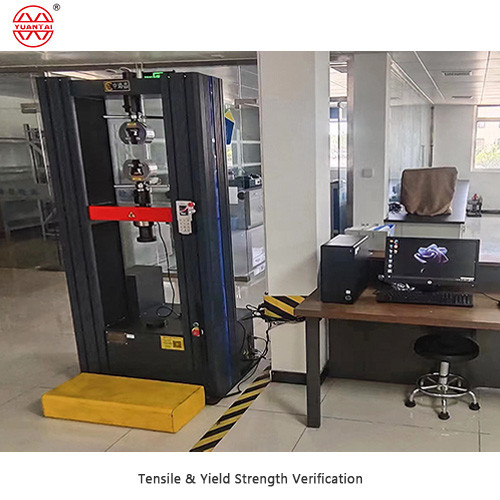
Leak-Tightness Verification
Reliability is essential for pipes used in water, gas, compressed air, and fire protection systems. To ensure dependable field performance, every EN 10255 tube undergoes leak-tightness verification before leaving our facility.
Hydrostatic Pressure Testing – Tubes can be tested at pressures up to 50 bar (5 MPa) to confirm leak-free performance.
Online Eddy Current Inspection – Advanced electromagnetic testing continuously monitors the tube body and weld seam for discontinuities and manufacturing defects.
Full Production Coverage – Every tube is verified through hydrostatic testing or electromagnetic inspection in accordance with EN 10255 requirements.
This comprehensive quality-control process helps ensure safe operation, long service life, and consistent performance in demanding industrial and construction applications.
EN 10255 Technical Cross-Reference Matrix
| Technical Parameter | Technical Parameter | Yuantai Derun Mill Capabilities | Engineering Advantage |
| Steel Grade | S195T (Non-alloy steel for threading) | Certified Premium Low-Carbon Base Metal | Ensures superior cold-bending workability and ductile threading. |
| Available Series | Heavy (H), Medium (M), Type L, L1, L2 | Full-Range Calibration & Production Cover | Allows precise engineering alignment with diverse budget constraints. |
| Outside Diameter (OD) | Strict standard boundary limits per size | Precision Sizing Control with Advanced Forming Mills | Guarantees a seamless, watertight fit for mechanical couplings. |
Wall Thickness (WT) | Max negative deviation: -12.5% (M & H series) | Strict Tolerance Optimization | Prevents localized pressure failures or premature wear during service life. |
Leak Tightness Test | Hydrostatic Test (≥50 bar) OR Eddy Current Test | Online Eddy Current Inspection and Hydrostatic Testing Capabilities | Multiple testing options help ensure product integrity and compliance with project specifications. |
Premium Hot-Dip Galvanizing & Corrosion Resistance Solutions
To facilitate your project submittals and engineering compliance verification, the following matrices outline the official chemical profile limits and mechanical threshold criteria for Steel Grade S195T, as mandated by the EN 10255 standard. Every production batch delivered by our mills complies with, or exceeds, these certified criteria.
🧪 1. Ladle Chemical Composition (Max % by Mass)
The chemical engineering of EN 10255 S195T focuses on minimizing carbon and impurity elements. This strict ladle metallurgy ensures premium on-site weldability and clean, crack-free thread engagement during automatic field fabrication.
| Element | Standard Limit (Max %) | Typical Mill Value (%) | Engineering Purpose & Structural Impact |
| C | ≤ 0.20% | 0.12% - 0.15% | Limits hardness peaks to secure exceptional cold-bending and field welding. |
| Mn | ≤ 1.20% | 0.45% - 0.60% | Optimizes yield-to-tensile ratio and refines grain structure. |
| P | ≤ 0.040% | ≤ 0.020% | Restricts cold-shortness, ensuring integrity in exposed climates. |
S | ≤0.040% | ≤ 0.015% | Minimizes non-metallic inclusions, maximizing cross-sectional homogeneity. |
⚙️ 2. Mechanical & Physical Properties
These physical property benchmarks represent the legal minimum thresholds required to guarantee that the tube profile will withstand high-stakes hydrostatic loads and mechanical roll-grooving stresses without structural yielding or micro-fissuring.
| Mechanical Property | EN 10255 Standard Requirement | Testing Methodology & Structural Compliance |
| Yield Strength (Re) | ≥195 MPa | Establishes the certified elastic limit; ensures structural baseline integrity under standard fluid network operation pressures |
| Tensile Strength (Rm) | 320 MPa to 520 MPa | Balanced zone optimizing burst pressure resistance with excellent ductility. |
| Elongation (A) | ≥20% | Supports high-efficiency cold bending and mechanical roll-grooving without seam splitting. |
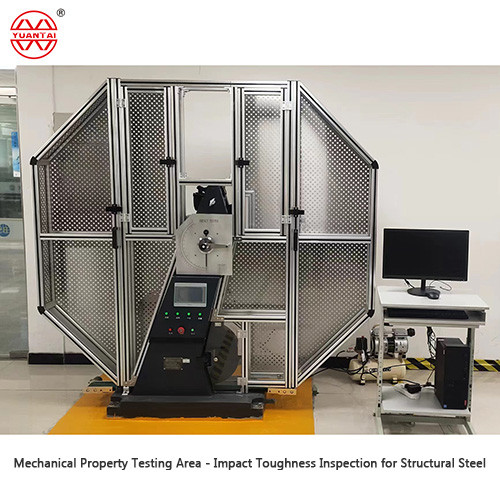
Mandatory Technological Tests | 1. Flattening Test
2. Cold Bend Test (for specified diameters) | Verified via routine flattening and cold-bend destructive sampling in accordance with the standard framework. |
Title
Sample Content
Title
Sample Content
Threaded & Grooved Solutions for EN 10255 Pipes
To satisfy diversified structural routing and fluid network installation criteria, our manufacturing matrix extends beyond standard tube mill extrusion. All supplementary fabrication processes are executed under strict geometric and thermal control to preserve the foundational mechanical thresholds mandated by EN 10255.
🔬 1. Precision Hot-Dip Galvanizing
When contracts specify a galvanized protective execution for localized fluid transport or open atmospheric exposure, zinc layer uniformity and adhesion are paramount.
The Technical Execution: Cleaned bare steel substrates undergo controlled immersion within our automated zinc bath. The metallurgical coating thickness and total zinc mass are precision-managed to strictly align with your specific contract criteria, project submittals, or designated international standards.
Metallurgical Integrity: This continuous thermal reaction creates a series of zinc-iron alloy layers topped with a pure zinc outer surface. The resulting total zinc coating mass and thickness are quantified via magnetic induction gauges and verified through accelerated laboratory Atmospheric Corrosion Simulation (Salt Spray Testing) to guarantee long-term resistance against zinc peeling or premature red rust propagation under high-humidity environments.
⚙️ 2. Threading & Mechanical Grooved Ends Sizing
For low-pressure gas lines, structural support bracing, or fire sprinkler configurations requiring rapid field jointing through traditional threaded couplings or mechanical roll-grooved coupling systems.
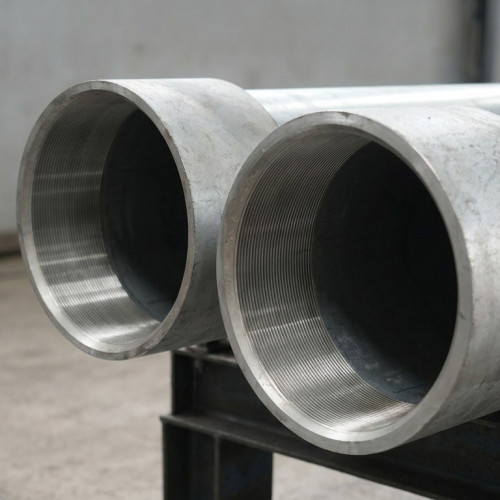
The Technical Execution: Pipe ends undergo high-speed CNC machining to generate precise tapered or parallel threads. The thread geometry, pitch, and coupling fitment are managed strictly to align with your specific contract criteria and international engineering benchmarks.
The Sizing Tolerance :During mechanical grooving operations, outer diameters and wall thicknesses are managed under strict ovalization and compression limits. The processing precision is engineered to align with your specific contract criteria, ensuring the structural integrity and mechanical sealing performance required for your designated coupling systems and field deployment.
✂️ 3. Flexible Cutting Solutions
Large-scale projects require precise cut-to-length processing to support efficient modular assembly and reduce on-site modification.
The Technical Execution: Depending on requirements, we apply mechanical sawing or laser cutting systems to achieve accurate fixed-length processing with millimeter-level control.
The Finishes Condition: Both methods minimize deformation at tube ends. Mechanical sawing ensures stable square-cut edges, while laser cutting provides higher precision for complex applications. All cuts meet high-precision industrial burr-free standards, facilitating seamless alignment for subsequent field fabrication.
Standard Seaworthy Packaging & Reliable Export Logistics
To support seamless port clearance and optimize freight efficiency up to the point of vessel loading, we enforce pragmatic cargo management, heavy-duty bundling, and strategic space utilization.
📋 1. Standard Mill Certification Verification
Project submittal and customs clearance require accurate documentation to cross-reference incoming steel tubes with laboratory evaluation records.
MTC: To guarantee absolute structural and chemical integrity, all production batches undergo multi-layered quality tracking and laboratory testing within our testing centers prior to leaving the mill. Upon shipment release, the official MTC conforming to EN 10204 3.1 is issued directly alongside your order documentation to fully verify chemical composition and mechanical compliance.
Customs Compliance: Dependent upon the stipulated Incoterms (such as FOB, CIF) and specific contract agreements, Yuantai Derun prepares and issues a standard suite of export documentation—including commercial invoices and packing lists. Any additional localized regulatory customs clearance documents can be coordinated strictly in alignment with your verified contract criteria.
📦 2. Optimized Freight Loading
International ocean freight operations dictate experienced load planning to maximize space utilization while strictly adhering to the statutory gross weight limitations of shipping lines and destination ports.
Stowage Planning: Our experienced logistics team manually calculates and coordinates loading sequences based on precise linear lengths and nominal diameters.
Operational Outcome: This practical arrangement balances total cargo volume against metric weight limits, minimizing structural shifting risks during ocean transit and optimizing freight cost-efficiency.
🛡️ 3. Structural Steel Strapping & Nested Loading
Our export bundling is engineered to optimize international shipping spaces while securing maximum cargo protection during maritime transit.
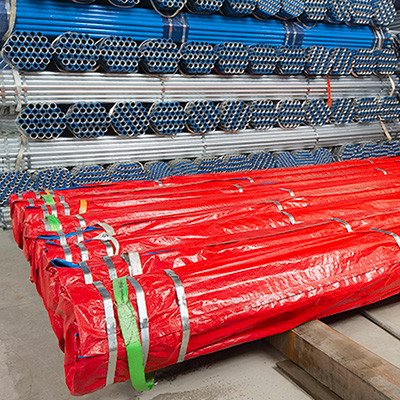
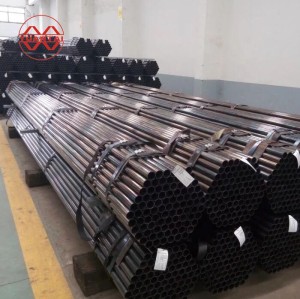
The Packaging Standard: Steel tubes are systematically organized into tight bundles and securely bound using high-strength structural steel strapping bands to prevent loose tube friction during transit.
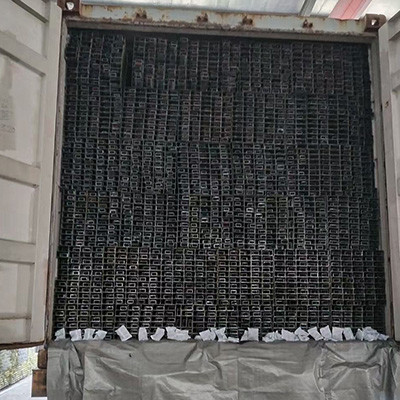
Nested Loading: For strategic dimensional combinations, we utilize Nested Loading by inserting smaller diameter tubes into larger ones. This mechanical layout significantly enhances container space utilization, dramatically increasing the total freight volume per shipment and lowering the average ocean transport cost per metric ton.